Pre-Sterilization Processing Equipment
Ultrasonic Cleaning Machine (for Implants)
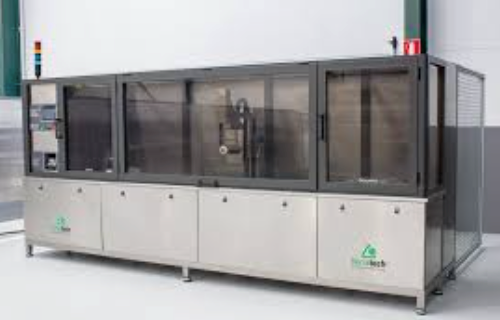
High-Precision Ultrasonic Cleaner
Achieving Surgical-Grade Cleanliness via Cavitation
An **ultrasonic cleaning machine** for implants uses **sound waves** to create microscopic bubbles in a cleaning solution that **violently implode**, removing contaminants like **oils, dust, and debris** from **complex implant surfaces, threads, and internal cavities**.
This process, called **cavitation**, is **highly effective** for achieving **surgical-grade cleanliness** without damaging the implants, ensuring they meet **stringent medical standards** for patient safety and product reliability. It is a vital tool in the production and preparation of medical implants, delivering a **thorough and precise cleaning** by using controlled cavitation to remove contaminants from even the most complex surfaces.
Key Benefits and How It Works
How It Works:
- High-Frequency Vibrations: Transducers, powered by an ultrasonic generator, convert electrical energy into **high-frequency sound waves** that are transmitted into a cleaning solution within a tank.
- Cavitation: These sound waves create rapid changes in pressure, forming tiny, **microscopic bubbles** in the solution.
- Bubble Implosion: When these bubbles reach a certain size, they collapse **violently (implode)**, creating immense, localized energy with high temperatures and pressures.
- Contaminant Removal: This force dislodges and removes even the smallest particles of **dirt, oils, and other contaminants** (Precision Cleaning).
Key Benefits:
- Precision Cleaning: Reaches areas inaccessible to manual cleaning.
- Non-Damaging: Cleans sensitive surfaces without abrasion.
- Enhanced Safety: Ensures implants meet stringent medical standards.
- Consistency: Provides repeatable and reliable cleaning results.
- Improved Efficiency: Speeds up the critical pre-sterilization process.
Technical Specifications (Demo Model: UC-IMP-50)
We offer a range of cleaning machines, from benchtop models for labs to large industrial systems for manufacturing. The specifications below are for a medium-capacity professional unit. Please share the technical specification of the implants or instruments you clean with us to share the right machine model for your application.
| Parameter | Detail / Specification |
|---|---|
| Tank Capacity | 50 Liters (Custom sizes available) |
| Ultrasonic Frequency | **28 kHz / 40 kHz Dual Frequency** (Selectable for coarse/fine cleaning) |
| Ultrasonic Power | 1500 W Peak (Adjustable Power Output) |
| Material | **Medical Grade SUS 304/316 Stainless Steel** Tank and Housing |
| Heating System | Integrated Heating up to **80°C** with digital controller |
| Transducer Type | High-performance **PZT (Piezoelectric Ceramic)** Transducers |
| Timer & Control | Digital timer, PID temperature control, and automatic shut-off |
| Compliance | **ISO 13485** and **CE** standards compliance |
Frequently Asked Questions
Your questions about medical equipment, answered.
What types of contaminants does ultrasonic cleaning remove?
Ultrasonic cleaners remove **oils, grease, dust, buffing compounds, residual particles**, and other debris that compromise implant sterility.
Can ultrasonic cleaning damage delicate instruments?
No. When operated correctly with the appropriate frequency and solution, **cavitation is safe** for sensitive materials like titanium, stainless steel, and fine optics.
What is the ideal cleaning frequency for surgical implants?
Most implant manufacturers recommend frequencies between **40 kHz and 80 kHz** for fine, intensive cleaning, as it provides a gentler but thorough cavitation action.
What type of solution should be used in the cleaner?
Only **validated, non-foaming, pH-neutral or mildly alkaline detergent solutions** designed specifically for medical device cleaning should be used.
Do you offer validation and installation support?
Yes. We provide complete **installation, commissioning, and validation support** to ensure the machine meets your internal and regulatory cleanliness protocols.
How does heating the solution help the cleaning process?
Heating the solution reduces its viscosity and increases the chemical activity of the detergent, which **significantly improves the cleaning efficacy** of the cavitation process.
Contact
Feel Free to reach out
Address
Plot No. 22, Block C, Phase-2, Noida, Uttar Pradesh 201305, India
Call Us
+1 (555) 987-6543
Email Us
info@lotusimportexport.com